





Take Profit in Trading
Learn how to set a take profit correctly using structural levels and reward to risk ratios, why moving targets mid-trade destroys expectancy, and how scale-outs help.
Authorship
Written by

Forex market analyst and educator with a strong focus on technical analysis and trader psychology.
Reviewed by

Forex Market Analyst , an ICT Chartered Graduate with 18 years of live trading experience in forex, gold, and crypto.
Key Takeaways
-
A take profit is a predetermined price level where a trade is automatically closed in profit. Like the stop loss, it is defined before the position is opened and is not changed because the trade looks good and more seems possible.
-
Structural take profits are placed at meaningful resistance or support levels already on the chart. Ratio-based take profits set the exit at a fixed multiple of the stop distance. Both produce better results than deciding when to close in real time.
-
Moving a take profit target higher while the trade is running converts a disciplined plan into a real-time decision made under greed. The take profit exists to prevent exactly this.
What Is a Take Profit?
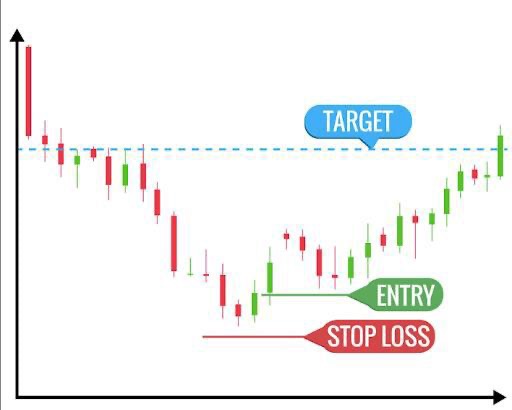
Every trader has experienced this: price moves in the expected direction, the trade is profitable, and then uncertainty begins. Should you close now? Should you wait for a bigger move? What if the market reverses? Many traders lose profitable trades not because the market was against them but because they had no clear exit plan and allowed greed to replace discipline. A well-planned take profit level solves this problem. It gives the trader a logical point to secure profits before emotions interfere with the decision.
If you have not yet read Risk Management, start there before continuing.
A take profit is a predetermined price level where a trade automatically closes after reaching a desired profit. It is set before the trade opens, when analysis is clear and emotion is not yet engaged by an open position. If price reaches the target, the trade closes automatically and the profit is secured. If price never reaches the target, the stop loss or another exit rule manages the trade. The pre-defined take profit removes the decision from the moment it is hardest to make correctly.
Why every trade needs a profit target
Without a defined take profit, the same patterns appear repeatedly: winning trades are held too long and give back profit during reversals; exits happen randomly at whatever price feels right in the moment; greed replaces the original plan; and results become impossible to evaluate because no two trades follow the same exit logic. A take profit creates discipline and consistency by ensuring every trade has a planned objective before any capital is at risk. Just as the stop loss protects capital, the take profit protects the gains that a working trade produces.
How Does It Work?
Structural take profit targets
The most reliable take profit placement uses the chart structure already present. For a long trade, the take profit is placed at or just ahead of the nearest significant resistance level above the entry: a previous swing high, a channel upper boundary, a known supply zone, or a round number with documented historical reactions. For a short trade, it is placed at or just ahead of the nearest significant support below the entry.
The logic is direct. Resistance is where sellers have previously appeared and where price has stalled or reversed. Taking profit just ahead of that level means the position closes before the market runs into a known wall of selling pressure. A take profit placed 5 to 10 pips ahead of the structural level accounts for the fact that price often stalls or turns just before reaching the exact level, rather than at it.
Long trade example: take profit at resistance
A long trade entered at a pullback to support in an uptrend places the take profit at the next significant resistance above the entry. If EUR/USD pulls back to 1.1672 with resistance at 1.1820, the take profit goes at 1.1810, just ahead of the resistance. If price reaches 1.1810, the trade closes with the planned profit before sellers at 1.1820 can push it back.
Short trade example: take profit at support
A short trade entered at a resistance rejection in a downtrend places the take profit at the next significant support below the entry. If GBP/USD rallies to resistance at 1.3260 and then forms a bearish engulfing candle, the take profit goes just above the next support at 1.3100, at roughly 1.3110. This ensures the trade closes before buyers at that support level can push price back upward.
Ratio-based take profit targets
The second approach sets the take profit at a fixed multiple of the stop loss distance. A 2:1 ratio places the take profit twice as far from the entry as the stop. A 3:1 ratio places it three times as far. Ratio-based targets ensure the strategy maintains a positive expected value over time: a strategy with a 40% win rate but a consistent 2:1 reward to risk earns money across a sufficient sample even though it loses the majority of individual trades.
Ratio-based targets are preferable when no clear structural resistance level sits at a convenient distance, or when the strategy requires consistent mechanical application. The limitation is that ratio-based targets may not align with the market's natural structure. A 2:1 target landing in the middle of a consolidation zone carries less probability of being reached than one coinciding with a structural level.
Scale-out exits
A scale-out takes partial profit at the first structural or ratio-based target, moves the stop to breakeven, and runs the remaining position toward a more ambitious level. The first partial secures a defined profit and removes the financial risk from the remaining position. The remainder can then pursue a higher structural level without the pressure of watching unrealised profit disappear during normal pullbacks.
Measured move targets
Many chart patterns produce a calculated take profit through the measured move concept. A flag, channel, or double top generates a price target by projecting the size of the preceding move or pattern height from the breakout point. The flags and pennants article in this series covers the measured move calculation in detail. These targets represent the market's own structural logic applied forward and are widely used as reference points for take profit placement.
The greed problem
The most common take profit error is a behaviour error, not a placement error. A trade reaches its planned level with momentum still appearing strong and the trader adjusts the target higher to capture more. This happens once, works occasionally, and gradually becomes a habit. Over many trades, winning trades regularly reverse from well ahead of the original target because the trader is now making a real-time decision rather than following a pre-defined rule. The planned take profit exists for exactly this moment. When a trade reaches the target, it closes. Adjusting targets upward mid-trade may occasionally produce larger wins but generates inconsistent, unmeasurable, and unimprovable results across a sample.
A take profit is a plan, not a prediction
A take profit does not guarantee that price will reach the target. Markets remain unpredictable and setups that look structurally sound will sometimes reverse before the target is reached. The purpose of the take profit is consistency. By following predetermined rules for every exit, traders remove emotion from trade management, create results that can be measured and improved, and ensure that the reward side of the expectancy calculation reflects what was actually planned rather than what happened to feel right on the day.
Example
The GBP/USD ascending channel documented in the Channels article in this series provides a clean comparison between structural and ratio-based take profit placement using the same trade. All channel data is confirmed in that article: channel lower boundary second touch at 1.3320 on April 14, 2026, channel upper boundary second touch at 1.3605 on April 28, 2026.
|
Take Profit Component |
GBP/USD Channel Trade: April 2026 |
|
Entry |
Long at 1.3320 (channel lower boundary, 14 April 2026) |
|
Stop loss |
1.3270 (50 pips below entry) |
|
Structural take profit |
1.3595, approaching the channel upper boundary |
|
Structural take profit distance |
275 pips |
|
Structural reward to risk |
1:5.5 |
|
Ratio-based take profit (2:1) |
1.3420 (100 pips, 2x the stop distance) |
|
Ratio-based take profit (3:1) |
1.3470 (150 pips, 3x the stop distance) |
|
Scale-out approach |
Close 50% at 1.3450 (first channel high, 130 pips); run remainder to 1.3595 |
|
Channel upper boundary (confirmed) |
1.3605 reached on 28 April 2026 |
|
Preferable target |
Structural: channel upper boundary is a documented level where sellers had previously appeared |
The structural target at 1.3595 is preferable here because the channel upper boundary is a verified resistance level confirmed by two previous touches. The market has shown where sellers appear. Taking profit just ahead of that boundary uses the chart's own evidence about where the trade is most likely to stall.
The ratio-based targets at 1.3420 (2:1) and 1.3470 (3:1) are valid but close the trade well before the structural resistance is reached, leaving significant available move untaken. The scale-out approach resolves this tension: securing partial profit at 1.3450, moving the stop to breakeven, and running the remainder to 1.3595 captures the best elements of both methods without requiring a real-time decision once the trade is live.
Why It Matters
The take profit level determines the average size of winning trades across the strategy. Combined with the win rate, that average win size produces the strategy's expectancy. A strategy that wins 40% of trades but consistently reaches 2:1 targets earns money over time. The same strategy with no take profit rule, where winning trades are closed based on how they feel, may average 0.8:1 because inconsistency produces smaller average wins than the setups actually offered.
The take profit is also a quality filter applied before the trade opens. If the nearest structural resistance produces only a 1.2:1 ratio from the defined stop, the setup does not meet the minimum standard even if everything else about the entry looks correct. No amount of good entries compensates for take profits that are consistently too small or inconsistently applied.
Knowing the take profit level before entering also changes the experience of managing the trade. A position progressing toward a defined target produces one decision: follow the plan. A position with no target produces an endless series of decisions: is this enough, should I hold, is it going to reverse. For a deeper look at how take profit levels connect to reward to risk ratios and their effect on long-term expectancy, read Risk Management alongside this topic.
Common Mistakes
|
Mistake |
Why It Matters |
|
|
Mistake 1 |
Moving the take profit target higher while the trade is running |
Adjusting the target upward while the trade is in profit converts a disciplined plan into a real-time decision made under greed. The original target was set based on the structure present before the trade opened. Moving it changes the reward to risk ratio retroactively and produces inconsistent results that cannot be evaluated or improved over time. |
|
Mistake 2 |
Setting the take profit too close to the entry |
A take profit at 1:1 from the stop requires a win rate above 50% to break even before costs. Most strategies do not produce consistent win rates above 50%. A minimum 2:1 target ensures the strategy remains net positive across a sample even with a win rate significantly below 50%. |
|
Mistake 3 |
Placing the take profit inside a resistance zone rather than ahead of it |
A take profit placed at exactly the resistance level risks the trade being closed by selling pressure before reaching the order. Placing the take profit 5 to 10 pips ahead of the structural level ensures the position closes before the market meets the resistance rather than exactly as it meets it. |
Quick Summary
A take profit is a predetermined order that closes a trade automatically when price reaches the intended target. It must be defined before the trade opens and not adjusted because the trade looks good and more profit seems possible.
Structural take profits are placed at meaningful resistance or support levels already present on the chart. Ratio-based take profits set the exit at a fixed multiple of the stop distance. Both produce better results than deciding when to close in real time. Scale-out exits combine both by securing partial profit at the first target and running the remainder toward a more ambitious structural level.
The take profit level is also a quality filter. If the nearest structural resistance does not produce at least the minimum required reward to risk with the defined stop, the setup does not meet the criteria. No amount of good entries compensates for take profits that are consistently too small or inconsistently applied.
Next Steps
You now understand how to define the profitable exit with structural precision. The next step examines the relationship between the stop and the target in full.
Risk Reward Ratio - Learn how to calculate the reward to risk ratio before any trade opens, understand what minimum ratio your strategy requires to be net profitable at its current win rate, and see how this single number connects entry, stop, and target into a coherent framework.
Risk Management - Revisit the full framework for protecting capital and see how take profit placement connects to the broader system of position sizing and account risk control.
Take Action
Open a demo chart on GBP/USD at the 4H timeframe. Identify the three most recent significant resistance levels above the current price. For each, calculate the distance between the current price and the resistance level. Pick a hypothetical entry and stop, then check which resistance level produces at least a 2:1 reward to risk ratio. Set the take profit 5 to 10 pips ahead of that level rather than at it. Then open three completed trades from a recent chart and ask: where was the next major support or resistance level, would that have been a logical take profit, and did the market reach the target before reversing. Run this across five different setups before placing any live take profit orders. A successful trade is not one that makes the most money. It is one that follows your trading plan with discipline and consistency. Apply structural take profit placement across at least 20 demo trades before using the method in live trading.


