





Inflation
The force that central banks fear most, and the data point that moves currencies fastest.
Authorship
Written by

Forex Market Analyst , an ICT Chartered Graduate with 18 years of live trading experience in forex, gold, and crypto.
Reviewed by

Forex market analyst and educator with a strong focus on technical analysis and trader psychology.
Key Takeaways
-
Inflation is the rate at which prices across an economy rise over time. When it runs above a central bank's target, it triggers the response that most directly moves currency markets: interest rate decisions.
-
The most important distinction in reading inflation data is between headline inflation and core inflation. The headline includes food and energy. Core strips them out. Central banks focus on core because it reflects more persistent underlying pressures.
-
The surprise in an inflation release, how the actual reading compares to the consensus forecast, is what produces the immediate market reaction. The broader trend in inflation over multiple months is what shapes central bank policy and currency direction over weeks and months.
What Is Inflation?
At its simplest, inflation measures how much purchasing power a currency loses over time. When prices rise, each unit of currency buys less than it did before. A loaf of bread that costs one dollar today costing $1.10 a year later is inflation at 10%. The same principle applied across every good and service in an economy produces the headline figure traders watch on the economic calendar.
If you are new to the forces that drive currency prices, start with What Moves the Market before continuing.
When the rate of price growth runs small and stable, around 2% annually, it reflects a healthy economy where demand is growing and businesses can invest with confidence. Problems arise when inflation runs significantly above that level for a sustained period, or when it accelerates without clear evidence of slowing. For forex traders, the relevance is direct: inflation is the primary input into central bank interest rate decisions, and interest rate decisions are what drive currency direction.
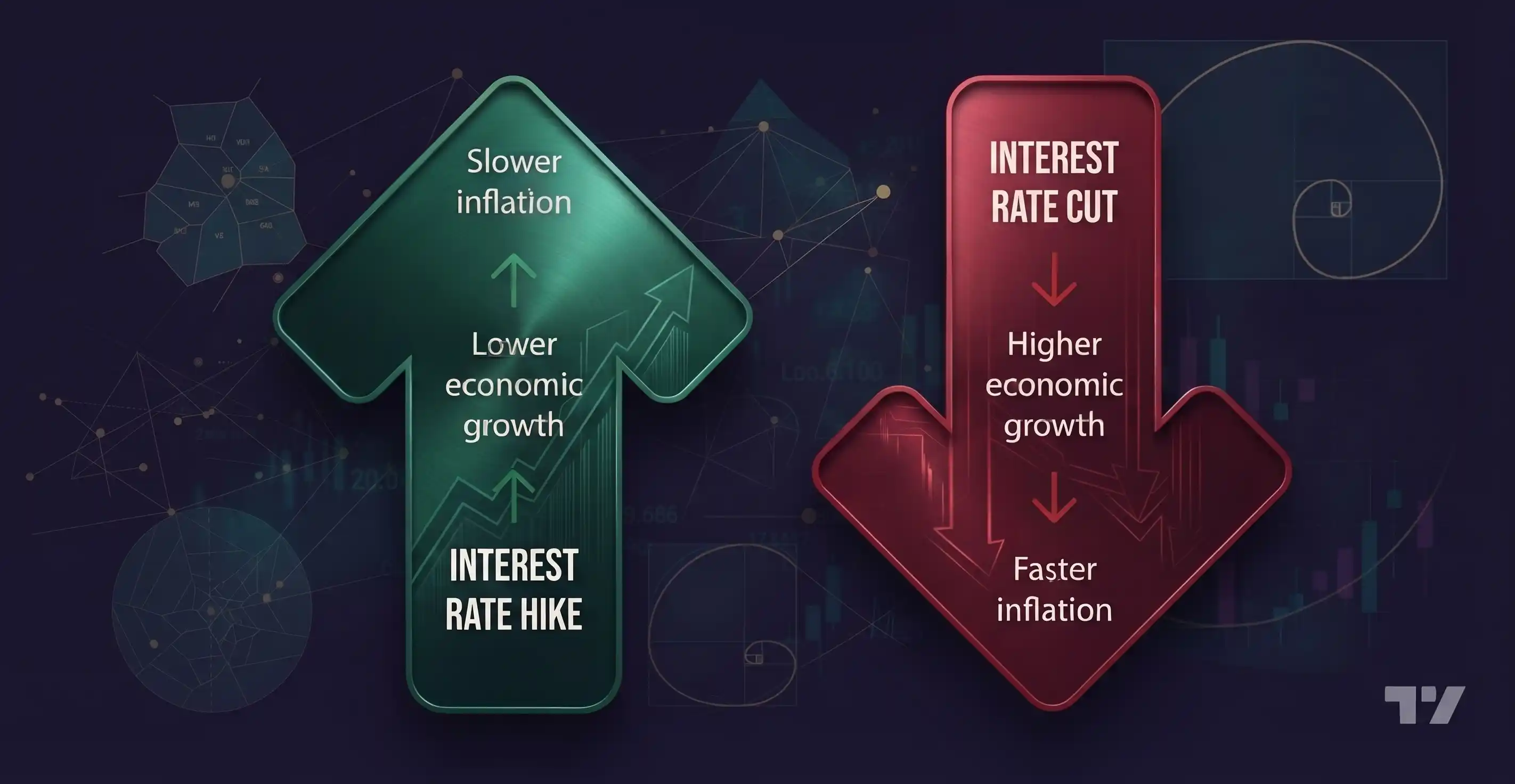
When inflation runs above a central bank's target, the bank has justification to raise rates or hold them at restrictive levels. Higher rates make the currency more attractive to international capital. When inflation falls toward or below target, the case for rate cuts builds. Lower rates reduce the yield appeal of the currency and weaken it against peers. That entire mechanism runs through one question: where is inflation going and what will the central bank do about it?
How Does It Work?
What causes inflation
Before reading inflation data, understanding why inflation accelerates helps interpret what is driving any specific reading.
Demand-pull inflation occurs when consumer or business demand for goods and services grows faster than the economy's ability to supply them. When more money is chasing the same amount of goods, prices rise. This type tends to reflect a strong economy and often increases the probability of rate hikes.
Cost-push inflation occurs when production costs rise and businesses pass those increases on to consumers. Higher energy prices, wage growth, supply chain disruptions, and raw material shortages all fall into this category. An oil shock is a classic cost-push event. This type can be more difficult for central banks to address through rate policy, because raising rates does little to increase oil supply.
Monetary inflation occurs when the money supply grows faster than economic output. More money circulating relative to available goods puts upward pressure on prices. Central bank quantitative easing and government stimulus programmes can contribute when they persist beyond the point of economic need.
Knowing which type is driving a reading helps anticipate how persistent the inflation is likely to be and how aggressively the central bank is likely to respond.
The inflation spectrum
Not all inflation is the same. Moderate inflation of around 1 to 3% is generally healthy: it reflects economic activity and gives central banks room to manage growth and employment. High inflation, running persistently above 4 to 5%, creates real economic damage through eroded purchasing power, uncertainty for businesses, and reduced real returns for savers. Hyperinflation, where prices rise uncontrollably and the currency loses its practical function as a store of value, is rare in developed economies but represents the extreme end of the same process.
For forex traders, the operative distinction is between inflation contained near the 2% target, inflation running hot enough to affect rate decisions, and inflation accelerating in a way that signals further policy tightening ahead.
Headline versus core inflation
Inflation is reported in two ways, and the distinction between them is one of the most important concepts in fundamental analysis.
Headline CPI measures the change in price across the entire consumer basket, including food and energy. It captures what consumers actually experience. Core CPI strips out food and energy prices. These two categories are highly volatile, driven by seasonal patterns, supply disruptions, and geopolitical events that can produce sharp swings in a single month that then reverse the next. Core reflects the more persistent, structural price pressures that central banks can actually influence through rate policy.
When a central bank decides on rates, it is primarily watching core, not headline. A headline surge driven entirely by an energy shock may prompt a cautious initial response if core remains contained. A core beat tells the market that price pressure is broad-based and unlikely to reverse quickly.
The Fed's preferred measure: PCE
The Federal Reserve does not primarily target CPI. It focuses on the PCE deflator, the Personal Consumption Expenditures price index published by the Bureau of Economic Analysis. PCE covers a broader range of consumer spending than CPI and weights categories differently. It tends to run slightly below CPI because it accounts for consumer substitution. The Fed's stated 2% inflation target is expressed in PCE terms. When assessing whether the Fed is likely to cut or hold, reading PCE alongside CPI gives a more complete picture of where the Fed believes inflation actually stands.
PPI as an early signal
The Producer Price Index measures inflation at the factory gate: the prices businesses pay for inputs before those costs reach consumers. Because production cost increases often feed through to retail prices over the following weeks and months, PPI provides an early warning of where CPI may be heading. A sustained rise in PPI that has not yet appeared in CPI is advance notice that consumer inflation may follow.
Energy and geopolitics
Oil prices connect directly to headline inflation through energy costs, which flow through to transport, manufacturing, and food production. A sharp rise in oil prices from supply disruptions or conflict produces an immediate effect on headline inflation. The key analytical question is whether the energy spike is likely to broaden into core or remain contained. When it remains contained, the central bank can often look through the headline surge. When it begins feeding into shelter, wages, and services costs, the problem becomes harder to dismiss.
Example
The US April 2026 CPI release, published by the Bureau of Labor Statistics on May 12, 2026, delivered the highest annual inflation rate since May 2023 and beat expectations across both headline and core measures. Here is how the data compared to forecasts:
|
CPI Component |
April 2026 Detail |
|
Release date |
12 May 2026 (BLS official) |
|
Previous reading (March 2026) |
3.3% annual |
|
Consensus forecast |
3.7% annual |
|
Actual headline CPI (annual) |
3.8% (beat by 0.1pp) |
|
Monthly change |
+0.6% (in line) |
|
Core CPI (annual) |
2.8% (beat 2.7% forecast) |
|
Core CPI (monthly) |
+0.4% (beat 0.3% forecast) |
|
Energy contribution |
+17.9% annual (primary driver) |
|
Shelter |
+3.3% annual |
The release was confirmed simultaneously by the Bureau of Labor Statistics, CNBC, EY, and Trading Economics. The headline beat was modest at 0.1 percentage point. The core beat, where the reading came in at 2.8% against a 2.7% forecast on a monthly rate of 0.4% against 0.3% expected, was more significant because it indicated that price pressure was not limited to the energy shock from the US-Iran conflict. Shelter costs and early airfare passthrough were also contributing, suggesting the inflation was beginning to spread.
The market implication was immediate. Chris Zaccarelli, chief investment officer at Northlight Asset Management, told CNBC on the day: given that inflation was heading in the wrong direction with the labour market holding up, rate cuts were very unlikely in the near term and rate hikes for the following year were starting to be priced in. When inflation runs above target in both headline and core terms, the currency of the reporting economy tends to benefit because markets immediately price out future rate cuts and begin pricing in a more restrictive policy path.
Why It Matters
Inflation is the central variable in modern central banking. Everything else, growth, employment, trade, wages, feeds into the inflation question at some point. A central bank confident that inflation is under control has room to support growth through lower rates. A central bank watching inflation run persistently above target has no such room, regardless of what other data show.
For traders, this means CPI releases are among the highest-impact events on the calendar. A beat changes the rate outlook. A changed rate outlook changes the currency direction. That sequence is as reliable as anything in fundamental analysis.
Inflation also creates one of the most difficult environments to trade technically: the stagflation scenario, where inflation is high but growth is weakening simultaneously. In that situation, the central bank faces conflicting signals. Cutting rates to support growth would worsen inflation. Holding or raising rates to fight inflation would further damage growth. Both outcomes are negative for the economy and the signals they send to currency markets are mixed and volatile. Recognising a stagflationary environment early prevents being caught on the wrong side of rate expectations that shift repeatedly without resolution.
For a deeper look at how to structure position sizes and stops around high-impact inflation data events, read Risk Management alongside this topic.
Common Mistakes
|
Mistake |
Why It Matters |
|
|
Mistake 1 |
Treating headline and core as interchangeable |
A headline beat driven entirely by energy prices can look alarming but reverse quickly if oil prices stabilise. A core beat is more persistent and more likely to change central bank behaviour. Reacting to the headline without checking what drove it leads to misreading the policy implication. |
|
Mistake 2 |
Ignoring the PCE in favour of CPI alone |
The Federal Reserve targets PCE, not CPI. CPI can show a different trend from PCE in any given month. A trader who only reads CPI may be surprised by a Fed decision that was perfectly rational given the PCE data published the previous week. |
|
Mistake 3 |
Assuming a hot inflation print always strengthens the currency |
In a stagflation scenario, high inflation combined with weak growth creates a policy dilemma that can weaken the currency despite the hot data. The market's response depends on whether the central bank has the room and the will to act. Context always overrides the raw number. |
Quick Summary
Inflation is the rate of price change across an economy. Central banks target around 2%. When inflation runs persistently above target, the pressure to hold or raise rates builds and the currency tends to strengthen. When it falls toward or below target, cuts become more likely and the currency weakens.
Core inflation, which strips out food and energy, is more important than the headline for assessing central bank behaviour. The PCE deflator is the Fed's preferred measure. PPI provides an early signal of where CPI may be heading. Knowing whether inflation is demand-pull, cost-push, or monetary helps judge how persistent it is likely to be.
The surprise in a CPI release, actual versus forecast, produces the immediate market reaction. The trend across multiple months shapes the broader central bank narrative and currency direction over weeks.
Next Steps
You now understand the data that most directly drives central bank behaviour. The next step is the decision that data ultimately produces.
Interest Rates - Learn how central banks set interest rates in response to inflation and growth, why rate decisions are the most market-moving events in forex, and how to read the signals that precede them.
What Moves the Market - Revisit the broader forces that drive price and see how inflation fits into the full picture of fundamental analysis alongside growth, employment, and geopolitical risk.
Take Action
Find the next scheduled US CPI release on an economic calendar. Note the current consensus forecast for both headline and core. When the release publishes, read the full report: check the headline figure, then the core figure, then the energy and shelter components. Form a view on whether the reading is likely to change the Fed's near-term rate path. Then watch how EUR/USD and DXY respond in the first 30 minutes and check whether that reaction aligns with your reading of the data. Practice reading CPI releases alongside the economic calendar on a demo account before making any trading decisions around live inflation data.


