



- Published on: 2026-11-16 02:38:00
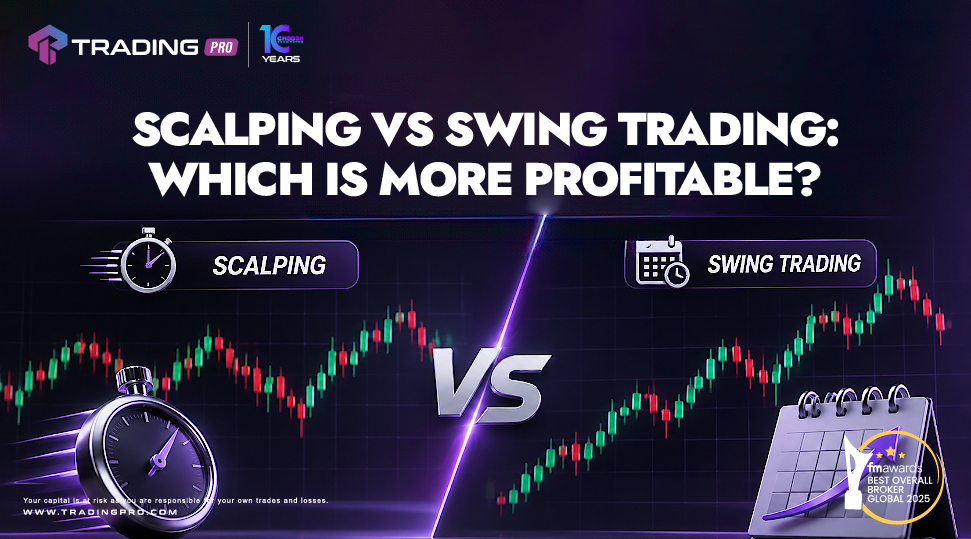
Scalping vs Swing Trading: Which Is More Profitable?
1. Understanding Scalping and Swing Trading
Scalping and swing trading are two different approaches to participating in financial markets. They differ mainly in how long positions are held, how frequently decisions are made, and how traders analyse price movements. Scalping focuses on short-term price changes, with positions often opened and closed within minutes or even seconds. Swing trading takes a longer view, with positions potentially remaining open for several days or weeks. Both approaches can be applied to Contracts for Difference (CFDs), depending on the available instruments, account conditions, and the trader's individual strategy.
2. What Is Scalping in CFD Trading?
Scalping is a short-term approach that aims to capture relatively small price movements through frequent transactions. Scalpers often use short timeframes, monitor market conditions closely, and rely on technical analysis to identify potential entry and exit points. Because positions are usually held for short periods, execution conditions and trading costs can have a significant influence on the overall outcome. Traders also need to consider variable spreads, commissions where applicable, and the possibility of slippage during fast-moving markets.
3. How Does Swing Trading Work?
Swing trading focuses on identifying potential price movements over a longer period. Instead of responding to every short-term fluctuation, swing traders may study market trends, support and resistance levels, chart patterns, and economic developments to identify possible opportunities. Positions can remain open for several days or weeks, depending on the strategy and market conditions. This approach may require less continuous screen monitoring than scalping, but it still involves regular analysis and careful consideration of market risks.
4. Scalping vs Swing Trading: What Are the Main Differences?
The main difference between scalping and swing trading is the timeframe. Scalpers generally make more frequent decisions and monitor shorter price movements, while swing traders focus on broader market movements over longer periods. Their analytical approaches can also differ: scalpers may pay close attention to short-term charts and immediate price behaviour, whereas swing traders may combine technical analysis with wider market context. Neither approach is automatically more suitable for every trader, as both require preparation, discipline, and an understanding of the instruments being traded.
5. Which Approach Has Higher Trading Costs?
Trading costs depend on several factors, including the account type, instrument, spread, commission, and market conditions. For scalpers, frequent transactions mean that spreads and applicable commissions deserve particular attention because they can accumulate across multiple positions. Swing traders should also review the applicable spreads, commissions, and instrument-specific trading conditions when maintaining positions over several days.
TradingPRO offers different account options with different cost structures. For example, the ScalpX account has floating spreads starting from 0.0 pips and a commission of $3 per lot, while the Pro account has floating spreads starting from 1.6 pips with no commission. These are starting conditions, not guaranteed fixed costs, and actual spreads may vary.
6. How Does TradingPRO's ScalpX Account Support Scalping?
TradingPRO's ScalpX Account is designed for experienced traders and is particularly suited to scalping strategies. Its published specifications include floating spreads starting from 0.0 pips, market execution, and a commission of $3 per lot. The account also provides access to several instrument categories, including Forex, commodities, indices, cryptocurrencies, and equities.
Traders interested in exploring another account option can also review TradingPRO's Micro Account and examine its specifications. Comparing account conditions, including spreads and commissions, can help traders understand the differences between available options before making a decision.
7. What Role Does Risk Management Play in Both Approaches?
Risk management is important regardless of the trading timeframe. Scalpers need to manage the risks associated with frequent transactions and rapid price changes, while swing traders should consider the possibility of larger market movements during the time a position remains open. Both approaches can involve leverage when trading CFDs, which magnifies exposure to price movements and can increase losses as well as gains.
Stop Loss orders may help traders define an intended exit level, but execution at the exact requested price is not guaranteed, particularly during volatile conditions or price gaps. Position sizing and a clear trading plan are also important parts of managing exposure.
8. How Can You Choose a Trading Style That Suits You?
Choosing between scalping and swing trading requires an honest assessment of your experience, availability, risk tolerance, and understanding of market behaviour. Scalping generally requires close attention to shorter-term price movements and frequent decision-making. Swing trading involves analysing broader price developments and being prepared to manage positions over longer periods.
Traders should also consider the costs and specifications of their chosen account and the instruments they intend to trade. Reviewing available account options, practising a strategy, and evaluating its results can help build a clearer understanding of whether it suits their circumstances.
9. Building a More Informed Approach to Trading
There is no universally more profitable choice between scalping and swing trading. Results depend on the strategy, market conditions, trading costs, risk management, and the individual's ability to follow a consistent plan. Understanding these differences can help traders make more informed decisions rather than selecting an approach based only on its potential returns.
With TradingPRO, traders can explore platforms such as MetaTrader 4 and MetaTrader 5 and review account options according to their trading needs. To learn more about the available platforms and account options, visit the TradingPRO Social Media and website .


