




- Published on: 2026-09-08 14:08:00
NFP, CPI, FOMC… Why Do Traders Get So Nervous When This Data Hits?
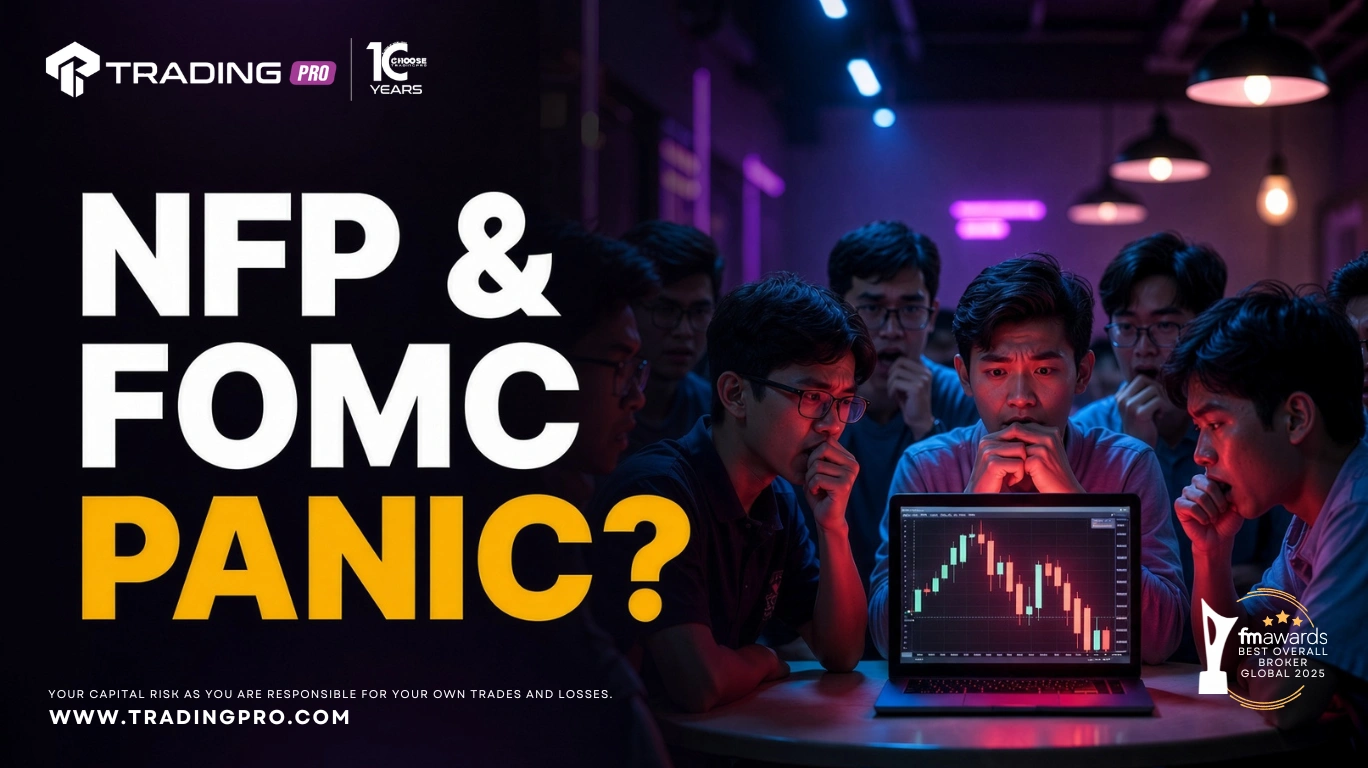
If you have been in the forex market for a while, you probably know the feeling. It is a Friday night, your coffee is getting cold, and you are staring intently at your screen. The clock is ticking down to exactly 8:30 AM Eastern Time. Suddenly, the market goes completely crazy. Candlesticks shoot up and down by dozens of pips in mere seconds.
Welcome to the rollercoaster ride of fundamental news releases.
For anyone trying to learn forex trading, understanding the mechanics behind these massive price swings is crucial. But why exactly do three little acronyms NFP, CPI, and FOMC make even seasoned traders break a sweat? Let’s break it down in plain English.
The "Big Three" of the Forex Economic Calendar

Whenever you check your daily forex economic calendar, there are standard updates, and then there are the market-shakers. These three are the undisputed heavyweights:
1. What is NFP? (Non-Farm Payrolls)
To answer what is NFP, think of it as the ultimate health check for the US economy. Released on the first Friday of every month, it shows the number of new jobs created in the US during the previous month (excluding the farming sector). If the number is surprisingly high, the US Dollar usually skyrockets. If it is lower than expected, the Dollar drops. Because the USD is paired with almost every major currency and commodity (like Gold/XAUUSD), an NFP surprise can trigger chaotic market movements.
2. CPI (Consumer Price Index)
CPI is basically the inflation gauge. It tells us how much the price of everyday goods like food, gas, and clothes has gone up or down. When CPI is dangerously high, the central bank has to step in and raise interest rates to cool down the economy. For forex traders, a higher-than-expected CPI means massive volatility for the Dollar.
3. What is FOMC? (Federal Open Market Committee)
If you are wondering what is FOMC and why everyone talks about it, they are the VIP group within the US Federal Reserve that decides on interest rates. When they announce an interest rate hike or cut, it completely shifts the global flow of money. Institutional investors will immediately move billions of dollars based on FOMC statements, which is why your MT5 chart suddenly looks like a wild heartbeat monitor.
Why Do Traders Panic During News Releases?
So, if what is trading revolves around buying and selling, why does everyone get so anxious during these specific events? It comes down to two major risks:
-
Extreme Volatility: The market can move 50 to 100 pips in a matter of seconds. If you are on the wrong side of the trade without a Stop Loss, your account balance could be wiped out instantly.
-
Wider Spreads & Slippage: Have you ever asked yourself what is spread and why it matters? Spread is the gap between the buy and sell price. During major news like NFP, liquidity providers pull back, causing the spread to widen dramatically. You might try to close a trade at one price, but due to slippage, it gets executed at a much worse price.
How to Survive the Storm
You don't have to avoid the market entirely, but you do need a solid strategy. Smart traders often secure their profits or move their Stop Loss to "breakeven" before the data drops.
If you are not yet comfortable riding the wild waves of NFP or FOMC, the absolute best thing you can do is practice without risking your hard-earned money.
Are you ready to test your news trading strategy safely? Before diving into the real market, try opening a free forex demo account with the best trading broker. You can experience the thrill of the FOMC rate hikes and NFP volatility in real-time, completely risk-free. Sign up today and master the market news like a pro!
Follow the TradingPRO Social Media!
Loved this article? Get more exclusive content and engage with fellow traders by following us on Our Social Channels.


